
How YMCA Southcoast and Lucria Ortiz, the president and CEO, are fighting to end food insecurity along the Massachusetts coast.
Like other YMCAs around the U.S., YMCA Southcoast leads with empathy by listening to community needs, removing barriers to participation, fostering belonging and inclusion, and designing programs that support the well-being and potential of the whole community.
The organization is powered by this mission thanks in part to the leadership of Lucria Ortiz, the president and CEO of YMCA Southcoast, who recently wrapped up her first year in the role.
Driving her overall leadership is a deep sense of empathy to help provide space for individuals to show up as their full selves. This was developed at a young age as Ortiz said she grew up in poverty where obstacles and adversity gave her a life toolkit.
“It taught me that people are fallible, resilient, strong and imperfect,” said Ortiz. “My mom was a single mother of five kids and my father was incarcerated all of my childhood. She had to navigate work and figuring out resources. It was a struggle. In a household where there are little resources, you know a lot more that’s happening than you should as a child. But you also see the hills and valleys and recognize the incredible strength and fallibility of people. That experience has been a guiding force in developing my leadership over the years.”
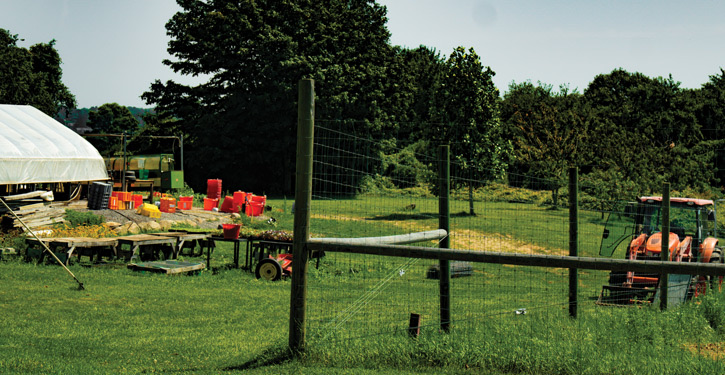
Through her life experiences and with the fact that the food insecurity rate in the county where the YMCA is located is at 46%, Ortiz sees a clear need for her leadership. The Y is answering it through a program that makes it standout on the Massachusetts coast — the Dartmouth YMCA’s Sharing the Harvest Community Farm.
Standing as the first YMCA farm in the country and spanning five acres, it grows about 45,000 to 60,000 pounds of produce a year. That food is given away through the Y’s pantry program and a partnership with the local United Way.
Combined with what the organization receives from the Greater Boston Food Bank, the Y distributes 1.2 million pounds of free food annually to the people of the South Coast.
“We’re the largest provider of free food in the region,” said Ortiz. “We seek to deepen our work with the food bank at a time when our communities are experiencing greater food insecurity. I’m very proud not just because of the food we harvest but the massive volunteer effort, all the farm education we do with youth groups, and how we bring people into the conversation on sustainability and growing your own food. It’s an amazing community exercise in learning and nourishment. I’m constantly thinking about equity and those who live in the margins. So, if we’re feeding people, we’re doing good social change work.”
The Power of a Community Farm
Backed by Ortiz’s leadership, Ashley Brister, the Y’s farm director, runs the farm by focusing on three key pillars: food access, creating community and education.
“I think what’s unique about our farm is it creates benefits on so many different levels,” said Brister. “Each year we grow food with the help of over 1,000 volunteers. The farm is benefiting the community and it helps people understand the reality of the statistics around food insecurity in the region. We can educate on why people struggle with the factors that contribute to folks not having enough funds to put three nutritious meals a day on their family’s table.”
Another part of the farm’s education is teaching about land stewardship, and how the community can create food systems that take care of the soil and the people who work it.
Brister said engaging volunteers helps to lift the hard work of farming and makes it a joyful experience for a job that can be arduous and very labor intensive.
“That’s how the farm is unique, because we’re really consciously thinking about those ethical things of caring for the land and for the people who are working on it,” said Brister. “We’re also providing work opportunities for 16- to 24-year-olds. They might not all become farmers, but they’re learning about accountability, responsibility and making impact in their community. The farm is a real, living example of our mission in action.”
Ortiz said Brister acts as a teacher as much as a director, which lets the farm act as a classroom for the area. In fact, the Y brings in many student groups to engage in service and learning when school is in session.
“Our farming goes from around May to October, so it gives us a wide breadth to include student groups,” said Ortiz. “Then we hold camp there, so our campers are intricately involved in the farm as well. I think that education piece is integral to life on a farm coast and that’s what I’m excited about.”
Along with education, Brister said what she loves most about community farming is it offers a different model for people from all backgrounds to come together and grow food for their neighbors. Instead of being disconnected from the food system, they’re active participants in it.

Ortiz’s Impact
Alongside the farm’s continual generational influence in the community, the Y has seen a further boost to its operations thanks to the leadership of Ortiz.
Despite coming from outside the YMCA system, she said her unique perspective has been helpful to the organization.
“I remember when I first came into the Y, they were calling me a parachuter, or someone who came from outside the YMCA,” said Ortiz. “To me, that signaled this organization has a culture of really bringing people up. When I’m recruiting talent, I’m really looking at how I can balance YMCA system folks and people like me. For example, I have an executive director who’s a former retailer, and that’s really been adding to our customer service strategies. But having institutional knowledge is also important.”
Brister also recalls when Ortiz first arrived at YMCA Southcoast, as the new leader she was on the farm getting dirty with other volunteers and planting sweet potatoes in her first couple of weeks.
While Ortiz’s deep interest and curiosity about the farm stood out to Brister and the staff, the way Ortiz challenged the YMCA overall to think beyond what the organization has always done made a deep impression.
“She’s been really incredibly supportive of new ideas, but she’ll also remind us to take baby steps,” said Brister. “She’s really trying to promote the visibility of the farm, and she never loses sight of the mission. I really appreciate that about her. When I first got here, I felt the Dartmouth Y was a little siloed, but she’s really creating opportunities for leaders across all of our six locations to get to know each other and see how we can better collaborate as an organization.”
Debbie Fringuelli, the COO of YMCA Southcoast, said Ortiz’s leadership through her first year is characterized by listening first, building meaningful relationships and inspiring teams around a shared vision.
“She’s strengthened community engagement, reinforced the YMCA’s mission-driven culture, and positioned us for continued growth, innovation and impact throughout the region,” said Fringuelli. “What’s even more special is her willingness to respect the history of employee culture at our association, understand our challenges, and her efforts to work with the team and develop a culture all employees want to be part of. I look forward to further advancing our shared vision as a team.”

The Road Ahead
Along with continuing to fight area food insecurity through the community farm, Ortiz said there are several exciting plans on the horizon for YMCA Southcoast.
These initiatives include furthering workforce development at the Y with a focus on summer camp. The skill building for first time roles for youth in camp lend themselves to strong career entry pathways. The Y is also part of a cohort of Ys developing strong customer service values and behaviors for all staff in consultation with the Disney Institute. Finally, the Y is engaged in a renovation of its flagship branch in New Bedford, Massachusetts.
Ortiz said the renovation is being funded by a large capital campaign, and the Y already raised over $14 million of its $28 million goal. The project will aim to create more spaces for deeper youth investment, intergenerational programming and greater partnership with health care providers. This branch has served the city since 1867, and the intention is to create a modern facility for the community.
“What capital campaigns allow you to do is really engage good community conversation around an institution that — especially in the Northeast — are anchors and have been here for over a century,” said Ortiz. “So, when you’re thinking about facility renovation, it’s such a privilege to engage in it and think about how we’re contributing to the next 100 years of this facility serving a community.”
But no matter what project Ortiz and her team take on, Fringuelli said the Y will continue to be a community convener, using empathy, innovation and partnerships to address people’s needs.
“Large nonprofits can sometimes become bureaucratic, while smaller nonprofits may lack resources,” said Fringuelli. “YMCA Southcoast occupies a middle ground — large enough to create meaningful regional impact, but local enough to maintain relationships with families, schools, businesses and community leaders.”
While the Y’s mission and scope make a difference in South Coast Massachusetts, Brister said the organization successfully harvests hope both literally and figuratively due to its character.
“It’s where we’re meeting our region in terms of having this access to beautiful farmland that positions us to address food security needs,” said Brister. “I think there’s also a strong culture of collaboration here. Thinking outside the box and really looking at the value of all our volunteers and community members — regardless of age, ability or background — I believe makes us unique.”