
From a factory that makes its own circuit boards to a warranty backed by real confidence, SportsArt is betting that the best equipment is the kind community rec leaders never have to worry about.
Before SportsArt ever sold a treadmill under its own name, its motors were already spinning inside its competitors’ machines. The company first began as a parts supplier, and according to Ruben Mejia, the executive vice president of SportsArt Americas, that origin still shapes nearly everything it builds today.
“A lot of people don’t know this, but we actually got our start by making parts for other equipment manufacturers,” said Mejia. “We would put our motor in competitors’ treadmills. Our founder is an engineer by trade.”
That engineering mindset created a problem. The founder discovered the components he was working with weren’t held to the manufacturing standards he desired. So, in 1977, he decided to build his own.
That decision remains the company’s defining trait.
“To this day almost 50 years later, we build about 90% of the components that go inside of our machines in our own factory,” said Mejia. “We get the raw materials, and we make our own circuit boards. We fuse together our own treadmill belt. There’s just so much stuff we do in-house.”
For Mejia, controlling the process is about more than passing inspection on delivery day. The goal is delivering equipment that keeps performing long after the installation crew has left — even in facilities where maintenance isn’t anyone’s full-time job.
“We consider that not everybody’s great at maintenance,” said Mejia. “So, what can we do to make that treadmill last a little bit longer, so you don’t necessarily have to worry about maintenance? Quality is something that’s been with us since the very start, and that’s going to continue being a part of SportsArt for the future.”
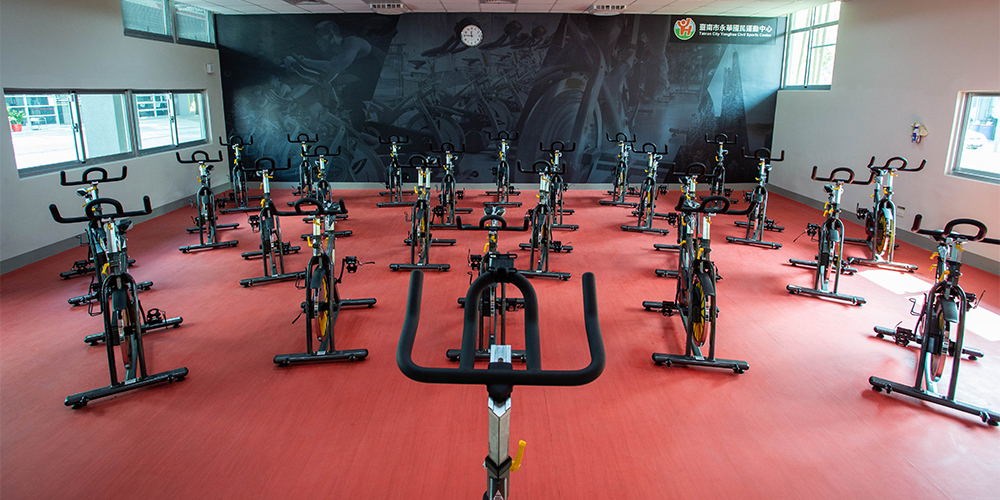
That focus matters to community rec organizations, which are juggling far more than a workout floor. Mejia pointed to groups like YMCAs, which work to benefit their communities in countless ways, from training programs to financial assistance.
“We don’t want the fitness portion of it to be something they have to worry about,” said Mejia. “Aside from building quality products, we’re offering one of the best — if not the best — warranty in the industry because we’re very confident of our equipment.”
As part of the warranty, customers receive five years of parts coverage, and for three of those years the company also covers the labor required to make repairs.
“If we weren’t building a great product and if we weren’t confident in it, we’d be losing money and we’d be bankrupt right now,” said Mejia. “Fitness isn’t going to be a headache for your staff or your operation staff when you work with us.”
However, even the most reliable machine can sit idle if no one knows it’s there.
One major piece of advice Mejia had for industry leaders is he encouraged them to promote new equipment as deliberately as they would any program. A simple flyer, a pop-up banner or a few emails to members can make a real difference.
“People are going to walk into the gym and know already what they’re going to do that day,” said Mejia. “But if they’re not looking for this specific equipment, they’re not going to see it.”
Staff training is the other half of this equation. Mejia said to ensure your staff is trained on how to use the SportsArt before introducing it to members.
“Remember, you’re going to have folks who are going to ask them questions,” said Mejia. “If your staff doesn’t really know much about the product, then it’s just going to sit there.”
Fortunately for community rec centers, SportsArt builds that guidance into every delivery.
Whenever time permits, team members are on site to explain how a machine works and what it can do. They also leave behind slide decks, videos and an educational packet with examples of how to promote the equipment, so new employees can get up to speed after staff turnover.
Mejia said the company will also return for additional training sessions whenever a facility asks.
“It’s not like we’re going to sell you the product and then say, ‘See you later,’” said Mejia. “We’ll schedule it in and make sure everybody understands how to use our equipment, because the staff are the people your members trust.”
That service-minded approach extends to the buying process, where Mejia said a common misconception can keep rec centers from picking up the phone.
“People say, ‘Oh, SportsArt, they sell to 80 countries. They’re a big corporation,’” said Mejia. “They might not think that they’re going to be able to afford us.”
In reality, the company works from a set price list, and the team has goals to hit like any other. While Mejia can’t promise huge discounts, the company does work to find solutions that fit a customer’s situation.
“Don’t be afraid to say, ‘Hey, this is my budget, and this is what I’m trying to do. How can we work this out?’” said Mejia. “Beyond pricing the two sides can collaborate on promotion that raises the profile of both the SportsArt brand and the customer’s organization.”
Ownership is a big reason for that flexibility. SportsArt’s founder has never gone public, with the company, as the founding family is still operating the business. This provides SportsArt with a lot more flexibility than companies who have to appease shareholders.
Mejia’s own approach to customers reflects that philosophy. He freely admits he dislikes high-pressure sales.
“I dislike people who try to sell you instead of allowing you to decide,” said Mejia. “I don’t have to sell. I just have to explain our story.”
Rather than ask buyers to simply take his word for it, Mejia points them to a customer who purchased their equipment previously, and he then steps aside to omit his influence.
It’s a perspective that comes naturally to someone who arrived from outside the fitness world. Mejia has spent more than 13 years with SportsArt after a career in the military and e-commerce. He and his wife, whose family founded the company, took over leadership SportsArt Americas in 2019, with the COVID-19 pandemic as their first real test followed by tough economic environment.
But what keeps him energized is the people he meets along the way. When asked what stands out about the community rec industry, his answer is simple — the passion.
“I know folks who’ve gone from holding really important positions at large club chains and go into these YMCA’s or community rec centers because of their passion,” said Mejia. “They can now actually work on something that helps people directly, whereas when you’re in this big corporation, you’ve got numbers to hit and marketing initiatives to follow. With community rec, you get to talk to so many people who have an amazing passion to help their communities. It’s amazing to hear every single time.”
Looking ahead to 2027, Mejia said SportsArt has plenty of big developments in the pipeline.
By the beginning of the new year, the company plans to release a second version of the ICARE — the motor-assisted elliptical SportsArt developed with the Madonna Rehabilitation Hospital and Research Institute in Lincoln, Nebraska. The new front-drive model drops the wheelchair ramp and is far more compact than the original.
Also, if somebody just needs a little bit of help, they can buy that front-drive elliptical with the motorized ride assistant and without a trainer press a button and start working out on their own. You simply press a button, and you’re already engaging your muscles in a workout where maybe before you needed a trainer to do it.
The machine has already made a lasting difference for users. Mejia said they’ve been told by some that the new piece has helped them learn how to walk again.
He also hinted at bigger moves ahead in 2027 as 2026 was a huge year for the company in terms of progress, even if the details aren’t ready to share.
“Larger customers are taking interest in us, so you’re going to see SportsArt in a lot more places, and not just in your typical gym or community rec center,” said Mejia.
Despite big things on the horizon, Mejia remains most focused and driven by the inspiration he gains from the community rec industry.
“What I love the most is talking to folks who actually have a huge passion,” said Mejia. “That’s my favorite part of the job. No matter how many times I hear a new story, it’s always still refreshing and reinvigorating because there’s another person I met who absolutely loves what they do.”
For rec center leaders who want to learn more, SportsArt can be found on YouTube, Instagram and Facebook at GoSportsArt. Interested parties can also email info@gosportsart.com to learn more or visit www.gosportsart.com.