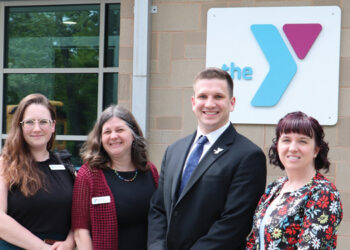


How rec centers are benefitting long-term from investing in community belonging.
Funding is an essential part of the livelihood of community rec centers. Without sufficient resources, the mission of these essential nonprofits would be at risk of failing.
That reality is only becoming clearer with recent cutbacks in federal funding. Despite these complications, industry leaders offer a clear solution — double down on enhancing belonging and your mission will only be strengthened.
“Five years ago was when COVID-19 struck,” said Chris Johnson, the CEO of the Countryside YMCA. “Many of us survived that and some of our balance sheets were even stronger coming through that time. We’ve made it through uncertain times. As uncertain as this feels right now, I think we can take some confidence from that. Let’s keep our eyes on the people we’re here for and find our way through this.”
Over at the Kaplen JCC on the Palisades, belonging is being strengthened through The Welcome Project — an initiative that authentically reflects the J’s commitment to building an inclusive environment.
Sue Gelsey, the interim CEO and chief engagement officer, said highlights of the program include the Jews Around the World series, which explores global Jewish cultures and broadens cultural understanding; blended cultural programming for diverse voices to engage with the J’s board, staff and community; and an “All Are Welcome” mural.
“These programs not only celebrate diversity but make our values visible and accessible,” said Gelsey. “True inclusion means recognizing how different identities shape people’s experiences. When there’s intersection between these dimensions, such as age and ability or gender and nationality, an environment is fostered where everyone feels a sense of belonging.”
Because the JCC is embracing belonging in this way, Gelsey said it’s also strengthened the resilience of their business model.
Over time, community demographics have changed and provided the J with more vitality, fostering meaningful intergenerational relationships between youth and participants in senior-specific programming and with Asian-American families which is the fastest growing group in the area.
This sense of belonging creates genuine joy and happiness — attracting even more people to the center.
“Our commitment to diversity, equity and inclusion has led to meaningful results,” explained Gelsey. “Updating our website’s ‘Who We Are’ section to feature diverse voices has deepened online engagement. Prioritizing diverse hiring has brought new perspectives and energy to our team. Partnering with cultural leaders has made our programs more authentic and attracted new participants, expanding our reach.”
At the YMCA of Greater Montgomery, belonging is an impact measure and is tied to the organization’s strategic plan.
AJ Hernandez, the president and CEO of the Y, said one of his favorite programs is their Brown Bag Bus — a program that provides over 350 meals per day in food deserts throughout the region. Each day the meals are organized, packed and served by YMCA members who volunteer throughout the organization’s 16 branches.
“It really brings together everyone in our community to serve those who are in need,” said Hernandez. “We also do a monthly membership bridge building series at our Ys that highlights different areas of our community and a lot of our work with partners.”
Hernandez said he believes the Y can galvanize community partners through prioritizing this kind of work. To further this mission, the YMCA of Greater Montgomery also ensures its director of impact takes a retrospective and evaluative lens when examining branches and programs. Hernandez said this has helped change the Y’s thoughts on how to measure outcomes.
One specific example of how belonging has benefitted the YMCA is through its Y-Towns — miniature playsets of towns where children can explore play and learn.
“Many of our younger members were receiving average to sub-par experiences in child watch spaces as the rest of the family was utilizing the center,” said Hernandez. “Our Y-Towns were a unique approach to engage local community businesses to build direct replicas to engage youth in reimagining what they can become. It has been transformational with our youth experience.”
Hernandez added his Y is also one of the leaders across the U.S. in teen programs and initiatives impacting thousands of teens each year. However, he said his team knows they could still be impacting even more if teens were in the Y daily.
“The barrier was inclusive practices as many were facing financial concerns to afford monthly fees,” said Hernandez. “Our NewGen program provides each teen in our community a free Y membership if they do two things: attend a monthly leadership session and volunteer for one hour in our Ys or community partner programs. It’s been a game changer as now they have a full membership like anyone else but are paying for it differently. It’s not a handout but a hand-up.”
Despite these beneficial program ideas, Gelsey said it’s vital to lead with authenticity, and to involve all levels of your organization in your plans.
“Ensure your space and materials visibly reflect your values and make creating a genuine space for belonging as a continuous learning process,” said Gelsey. “Small, intentional steps like renaming a committee or showcasing community voices can have a big impact in creating a culture where everyone truly feels welcome.”
For Hernandez, his lasting tip for other industry leaders when it comes to enhancing belonging is to first get feedback from your community and don’t assume what others need.
“Do listening sessions, community forums and be ready to lead with more empathy,” advised Hernandez. “Our centers are meant to be a place where someone can achieve something which is different for everyone. Also, partner on this work. Connect with other community leaders who are already doing some of the things you want to start. Lean into a collective impact which will only have greater outcomes for all.”