
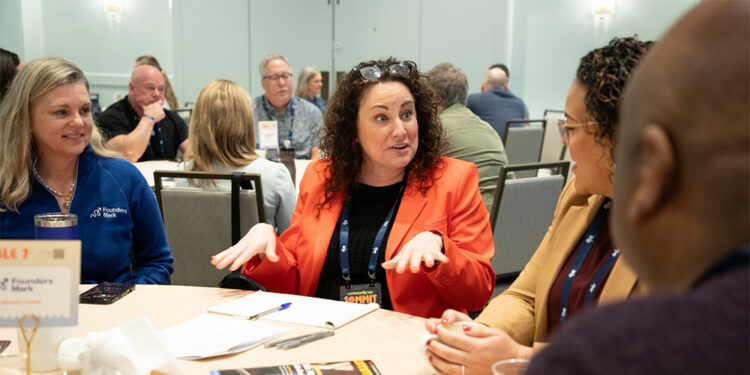
Taking place from February 22–24, 2027, at the Omni Rancho Las Palmas Resort & Spa in Rancho Mirage, California, the 2027 Community Rec Leadership Summit will feature industry-leading education on the most relevant topics for nonprofit recreation centers.
Just one conversation at this event could save you months of trial and error due to the insights you can gain.
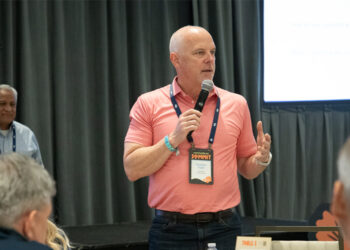
For example, 60 industry leaders came together at the 2026 Summit and discussed their solutions for the top issues facing nonprofit community rec centers.
Below, discover the top eight findings from this year’s event and get an idea of what you’ll learn at the 2027 Summit.
1. Capital pressure is an existential issue.
Aging infrastructure and rising debt costs are outpacing the sector’s ability to raise money through traditional fundraising alone. Nearly 98% of the largest YMCAs in North America are either mid-capital-campaign or planning one within the next two years, meaning organizations are increasingly competing against each other for the same donor dollars in the same communities. Compounding the problem, youth programs once cross-subsidized by strong membership revenue now frequently require operating subsidies themselves. This convergence of rising costs, shrinking traditional funding and simultaneous fundraising asks across the sector is forcing leaders to pursue capital sophistication well beyond conventional campaigns.
2. The membership-subsidizes-youth programs model has broken down.
For decades, robust adult membership revenue funded low-cost youth sports, camps and afterschool programs. Shifting demographics and economics have eroded that model, leaving organizations dependent on program revenue that is itself financially risky. Centers that expanded into childcare or mental health services without sustainable funding structures have absorbed losses, while the sector’s historic commitment to affordable community access constrains how much pricing can realistically rise. The result is a structural financial tension between mission-driven affordability and the revenue needed to sustain expanded programming.
3. Younger generations are both the biggest opportunity and biggest retention risk.
Click-to-cancel laws have exposed how weakly connected many members feel to their rec centers. Data across organizations shows millennials and Gen Z are simultaneously the top-joining and top-canceling demographics, largely because programming, staffing and facility design remain oriented around older, more visibly present members. Reliance on part-time teenage frontline staff — while cost-effective — limits the relational depth needed to build belonging — especially compared to boutique fitness competitors who staff lobbies with full-time, engagement-focused employees. Without deliberate redesign for younger members, this revolving-door pattern will continue.
4. New Market Tax Credits (NMTCs) and health care partnerships are underused capital sources.
Federal NMTCs let investors recoup up to 39% of investment over six to seven years and can be stacked with philanthropy and debt. Separately, health care systems hold substantial prevention-focused funding that rec centers rarely access because they position themselves as sponsorship recipients rather than measurable health outcomes partners — a reframe that leaders said can unlock $2 million annually in near-free funding.
5. Creative ownership structures can separate mission from financial risk.
One YMCA partnered with a developer to build 100 workforce housing units alongside a new facility, placing all debt and ownership in a separate legal entity while the Y operates as a $1 per year tenant — insulating its balance sheet if the housing venture fails. Other organizations are pursuing college-style endowments and strategic asset consolidation. One generated $13 million by selling two properties and merging three nearby branches into a single, more efficient campus. These models represent a broader shift toward separating operational mission from capital and debt exposure.
6. AI is reshaping operations, coaching and program design simultaneously.
Competitors are already using AI chatbots and multilingual communication tools capable of fluent conversation in 150-plus languages, raising the bar for member experience. Beyond operations, one organization is building an AI coaching tool grounded in its mission to give frontline and part-time staff on-demand leadership development. AI is also speeding up program design, from literacy curricula to special-needs programming. Leaders emphasized normalizing AI use as a professional skill rather than a stigma, while also raising concerns about AI’s effects on youth mental health and relationships.
7. Underused space and reframed demographics can unlock revenue and capital stories.
Leaders shared examples of converting empty rooms into special-needs adult programming and after-school literacy programs — initiatives that filled space, served unmet community needs and strengthened capital campaign narratives, leading to a $12 million renovation in one case. Similarly, leaders challenged the automatic practice of discounting senior memberships, noting many seniors have significant disposable income and that addressing senior isolation could support both new programming and legacy-giving relationships.
8. Deliberate leadership development is now a competitive necessity.
Roundtable consensus found organizations developing people at every level — not just senior executives — build stronger culture, attract better talent and withstand leadership transitions more effectively. Key priorities included offering flexible work arrangements as a genuine retention factor, creating advancement through stretch assignments rather than waiting for open positions, and reframing the departure of internally developed leaders for bigger roles elsewhere as a marker of success rather than a loss. This signals a shift from informal mentorship toward structured, intentional development systems.
Spots are now over halfway full for the 2027 Community Rec Leadership Summit as registration is open! Email john@peakemedia.com to learn more about attending. Interested in sponsoring? Email rico@peakemedia.com. For the full Community Rec Leadership Summit itinerary and details, visit peakemediaevents.com/cosummit.
Thank you to our current 2027 sponsors for making next year’s event possible, including Premier sponsor Arly; Diamond sponsors ACTIVE Network, Daxko, InBody, Keiser, NinjaZone, seca and Traction Rec; Platinum Plus sponsors Amilia, CourtReserve, Matrix Fitness, NuStep, TMI Sustainable Aquatics and SportsArt; Platinum sponsors Brown & Brown, DynaDome and Power Plate.