
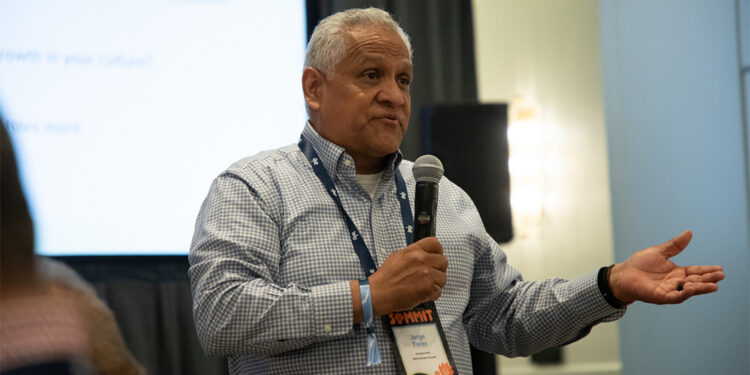
In his new report, Jorge Perez, the president and CEO of the YMCA of Greater Cincinnati, argues that the traditional capital-intensive nonprofit model has reached a structural breaking point.
In “When the Bucket Leaks Faster Than It Fills” Jorge Perez, the president and CEO of the YMCA of Greater Cincinnati, uses fourteen years of financial data from his Y to make the case that rising costs are fundamentally outpacing revenue growth. Overall, cost-cutting alone cannot fix what is — at its core —a model-design problem in community recreation.
His data tells a striking story. Between 2012 and 2026, revenue grew 41.5%, but insurance costs surged 321%, occupancy costs rose 83% and staffing expenses climbed 36% while the actual workforce shrank by 30%. Capital spending consistently exceeds operating surplus, forcing organizations into perpetual reserve drawdowns.
Perez proposes a new equation for sustainability: smaller physical footprints, a mission repositioned around human development — the ARB framework of achievement, relationships and belonging — AI-powered operations, intentional volunteer engagement and a stronger individual philanthropy pipeline. He argues the YMCA’s competitive advantage was never its buildings. Instead, it was its unique capacity to help people achieve goals, build relationships and find belonging. He contends that redesigning around that truth is how the mission survives.
Read the full report in PDF form here.
Top Takeaways
- The Y’s competitive advantage is human development, not facilities. Members experiencing achievement, relationships and belonging score a Net Promoter Score of 79, retain at higher rates and donate $1,000 more annually.
- AI represents a transformational — not incremental — opportunity. From shared back-office services to predictive maintenance, AI could reduce administrative costs by 40 to 60%.
- Volunteers are a strategic asset, not just free labor. Cincinnati’s 4,300 volunteers logged 109,000 hours in 2025, directly strengthening mission delivery, member engagement and the donor pipeline.
- Good news exists in the industry. Rec centers aren’t starting from weakness. Many of our organizations hold significant reserves, carry low debt and enjoy deep community trust. There’s time — but not unlimited time — to make deliberate, strategic shifts. The question is whether nonprofits use their strength to evolve proactively, or wait until the water rises high enough to force reactive decisions.