

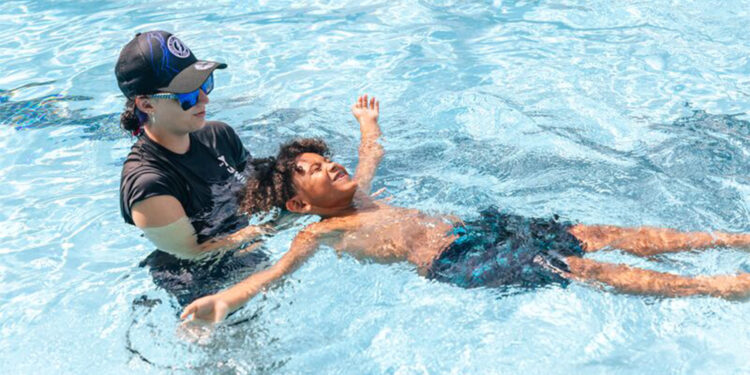
The YMCA of Central Florida is breaking cycles of limited participation in the community through expanding swim lesson access by offering free lessons to youth experiencing homelessness.
Kristen Cole, district vice president at the YMCA of Central Florida, said this new program removes one of the biggest barriers for these youth, which is entry to life‑saving water safety skills.
“In a state like Florida surrounded by water, drowning is the leading cause of accidental death for children between the ages of 1–4, making these lessons especially critical,” said Cole. “For many of these children, it’s their first structured time in a pool. They gain not just swimming ability, but also confidence, trust in caring adults and a safe space for healthy activity.”
Cole said fear of water and lack of swimming ability are often passed down generationally in families. So, the YMCA is breaking decades of limited access, creating a new cycle where water confidence and safety skills are passed from parent to child.
“Research shows when a parent knows how to swim, their children are far more likely to learn. That’s the long‑term impact we hope to create,” said Cole. “We’ve already seen ripple effects — children become more active, families feel more connected to the community and the YMCA builds deeper relationships with local social service agencies.”
She added the excitement from participants has been palpable. Smiles, laughter and a look of pride are consistently present after they learn to hold their breath for the first time. While many arrive hesitant or afraid of the water, their confidence soars. Staff report lessons are often the highlight of a child’s week.
Lessons for the Industry
To successfully expand swim lesson access, Cole said a huge budget isn’t necessary to make a big impact.
“Partnerships are key,” she said. “Teaming up with local schools, shelters, service‑oriented organizations like Rotary or Kiwanis clubs, and other nonprofits can help you identify and reach the children who need it most.’”
Also, expanding access doesn’t just prevent drowning — it builds trust in your organization, creates pathways for continued participation and positions your center as a vital community resource.
“Start with partnerships to find the right audience and secure support,” said Cole. “Pilot first — start small, learn, adjust then expand. Engage your staff early so they feel ownership and excitement. Also, measure the impact. Stories and data will help sustain funding and community buy‑in. Finally, stay flexible. What works on paper often needs adjusting once you’re in the pool.”
Other Ways to Expand Swim Lesson Access
Cole listed the following strategies to ensure everyone in your community can learn this valuable life skill:
- Host family swim nights or community splash events to make the space feel welcoming.
- Offer lifeguard or swim instructor training for teens as a first job opportunity.
- Run swim team “Try‑It” or Open House days to spark interest in competitive swimming. Even “Bring a Friend” days can encourage team members to invite others to try.
- Incorporate water‑based games and fitness activities for youth who may not be drawn to traditional lessons. Partner with other kid‑focused areas within your program such as sports, childcare centers or early learning centers.
Here are other recreation centers successfully utilizing swim lessons:
YMCA of Southern Arizona
At the Lighthouse/City YMCA branch, an eight-week swim class is being offered to Afghan refugee girls — many of whom were forbidden from learning or participating in sports under Taliban rule — are now diving into the freedom to learn.
YMCA of South Florida
The “Swim Buddies” program at YMCA of South Florida pairs children with special needs with an experienced swim instructor to help them learn to swim.
St. Louis JCC
The J Splash Academy Swim School and Splash Babies program at St. Louis JCC is an encompassing learn-to-swim program designed to create confident, strong, lifelong swimmers of all ages starting as early as six months.



