

Community rec centers are reimagining facility design to foster wellness, inclusion and connection.
Community recreation centers are being transformed into more than just physical spaces for fitness. Today, centers across the country are accommodating the community first and foremost when approaching design and architecture for their site.
Whether through open-concept lobbies that double as living rooms or vibrant terraces overlooking outdoor fitness zones, design is shaping behavior, deepening community roots and expanding the role recreation facilities play in holistic health.
This is extremely important considering community recreation centers serve evolving communities.
According to Stantec, a global leader in sustainable engineering, architecture and environmental consulting, buildings that bring communities together must adapt in stride. These design trends in community recreational centers go beyond aesthetics, practicality and functionality. They’re evolving to match the wide array of people who use them — truly serving as a community hub.
Monica Pascatore, the design leader at CannonDesign Baltimore, said some of these trends in community recreation include:
Technology. The rapid evolution of technology helps members track their fitness at new levels, engage in new esports opportunities and empowers owners to better operate their facilities.
Art Installations. Community projects infuse public art more and more. Often, these art programs empower local artists and speak to local cultures.
Programming for Teens. There’s an increased focus on creating spaces for teenagers after the impact COVID-19 had on this group.
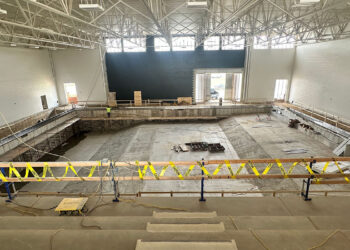
Renovation and Adaptive Reuse. Both cost and sustainability challenges are pushing organizations to consider renovating and/or adapting existing resources.
Resiliency: Organizations think more about their facility’s resilience and how it factors into their community’s resilience. This leads to more sustainable design solutions.
At the Houston JCC, a newly unveiled pavilion is turning a lot of heads in the community for all the right reasons.
“As you come through the front doors you see the bright, open atrium, a large staircase, the magnificent three-story wall built with tile from Israel and a 10-foot video screen that showcases current happenings,” said Robin Fortenberry, the chief of facilities at the Houston J. “These items — along with the friendly faces of our staff — are what help to create a welcoming and positive first impression.”
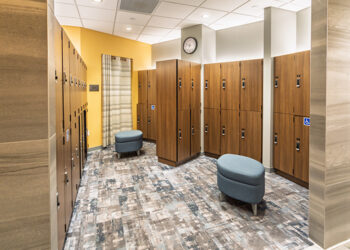
This first impression sets the tone for a space that’s equal parts functional and aspirational. Visitors can access an indoor playground and cafe, enjoy locker rooms with sauna, steam room and whirlpool access, or head to a fitness center that connects to an outdoor workout space overlooking a pool.
It was all designed with intentionality to not just look good but to bring people together at the J.
“The entire facility is truly an architectural showcase,” said Fortenberry. “There’s also an increase in demand for use of our spaces. These provide additional revenue for the agency as well as an opportunity for more individuals to experience our facility and what the JCC has to offer.”
This emphasis on creating both functional and visually inspiring spaces isn’t unique to one location. Across the country, JCCs, YMCAs and community centers are reimagining their environments to better serve evolving member needs while fostering a deeper sense of connection.
In Muncie, Indiana, the new YMCA — which opened in early 2025 — took a similar approach, crafting a design that places belonging front and center.
“Our new YMCA was intentionally designed to be more than a facility — it’s a catalyst for connection, wellness and belonging,” said Chad Zaucha, the former president and CEO of YMCA of Muncie.
Intentionality led to one of the most striking features of the new Muncie facility; a bright, open lobby that functions like a community gathering space. With natural light coming through the lobby’s floor-to-ceiling windows, the area allows visitors to immediately feel welcome.
Features like a zero-entry pool for accessibility, family-friendly locker rooms and a youth innovation space capitalize on this feeling. The Muncie Y is redefining what community-centered design can be.
Zaucha said the same people-first mindset inspired the co-location of Open Door Health Services inside the Y, delivering integrated behavioral care within the same walls as youth programs and aquatics.
“It’s a whole-person approach to wellness that’s both innovative and deeply aligned with our mission,” said Zaucha.
Facility design doesn’t stop at the walls of a weight room. Across both centers, architecture is being used to weave together wellness, health care and holistic programming. Inclusive design was foundational to the build and design process.
“The most impactful spaces are the result of deep community engagement, paired with strategic research and mission clarity,” said Zaucha. “Don’t start with aesthetics — start with people.”
Behind every successful project is a strong team. Both Fortenberry and Zaucha credited their design and construction partners with bringing their vision to life.
At the Houston J, partners Gensler, The Mathis Group and Tellepsen helped execute a modern look that simultaneously honored the community’s cultural identity.
In Muncie, its partnerships with Elevatus Architecture and Weigand Construction brought creativity and mission alignment to the table. Support from GRO Development and Y-USA ensured the design was grounded in data, not just aspiration.
Zaucha said each partner played a vital role in turning the Y’s vision into reality through designing a facility built with the community, not just for it.
Another driving factor behind these projects is inclusivity. Both the JCC and YMCA prioritized universal design in their new builds. From zero-entry pools that support mobility challenges to intergenerational lounges that promote connection across age groups, the goal is to create environments where everyone can thrive.
“Our universal changing rooms and family locker spaces were designed with dignity and accessibility in mind,” said Zaucha. “No one should feel like the facility wasn’t built for them.”
And for facilities built to serve increasingly diverse populations, inclusivity is non-negotiable.
“Almost everyone that comes to the property for the first time is just in awe,” said Fortenberry. “We’ve seen an increase in rental interest from community groups, private individuals and partner organizations. It’s become more than just a rec center — it’s a destination.”
Though the redesigns have successfully been integrated into their respective communities, each rec center is looking forward to how to continue to improve their spaces.
Fortenberry said a nice complement to other current facilities could look like more usable green space, while Zaucha said he envisions an expanded outdoor campus complete with trails, play zones and mindfulness gardens. He also sees potential for a workforce development center and community innovation lab housed within the Y.
For recreation professionals considering renovation or new construction, both leaders offered similar advice: dream boldly but root those dreams in your community.
“Start your plan by imagining how you want people to feel when they enter for the first time,” advised Fortenberry. “Let that vision be the foundation.”
Zaucha echoed the sentiment and encouraged others to lead with listening. He said partnering with the right organizations, ones that understand not just construction but culture, is key to creating impact.
In the future, Pascatore said it will be hard to predict the exact features that will resonate with communities, which is why her team is always advocating for community engagement as part of the design process.
“Often, we find unique realities about a community evolve our design decisions and make them more meaningful,” said Pascatore. “Designing centers that also have spaces for community events and occasional activities like farmer’s markets, yoga and more is important. Think of the gaps in the community your center can fill.”
Lastly, Pascatore added there’s no substitute for community engagement. Designers and recreation leadership should never assume they know the real needs of a given community.
“When your team talks to community groups and hears their needs, wants and hopes directly — that’s when your project will become stronger,” said Pascatore. “Community engagement can yield unexpected and exciting results for your center.”