
In the never-ending quest to maximize programming for members, community rec centers are now focusing on enhancing playgrounds for families to enjoy.
Specifically, Kristin Sidwell, the marketing and communications manager at CedarWorks, said after decades of handcrafting playsets, the company has seen firsthand how the conversation in community recreation has shifted from simply having a playground to curating an environment.
“As we look ahead into 2026, the goals of longevity, environmental stewardship and radical inclusion are defining the next generation of play,” said Sidwell. “We’re seeing a significant move toward nature-inspired design that prioritizes chemical-free, sustainable materials over traditional plastics and treated lumber. Also, the need for true inclusivity has evolved beyond ADA compliance to include sensory-rich zones and cool-touch surfacing that ensure children of all neurodiverse and physical backgrounds can play safely. Finally, there’s a growing demand for spaces where all family members can play together.”
Here’s how a few rec centers have directly transformed their outdoor playgrounds through those trends:
Jewish Community Alliance of Jacksonville, Florida
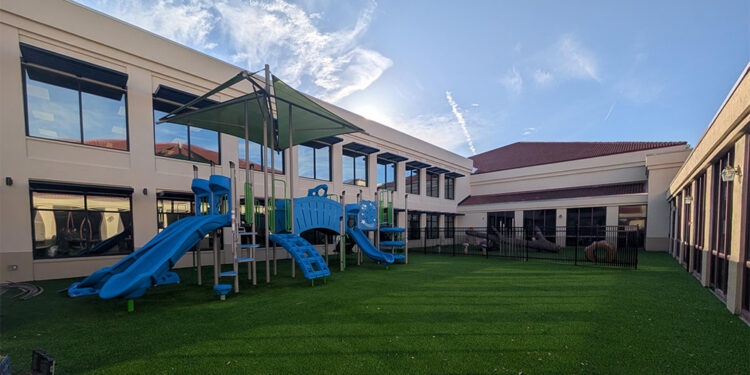
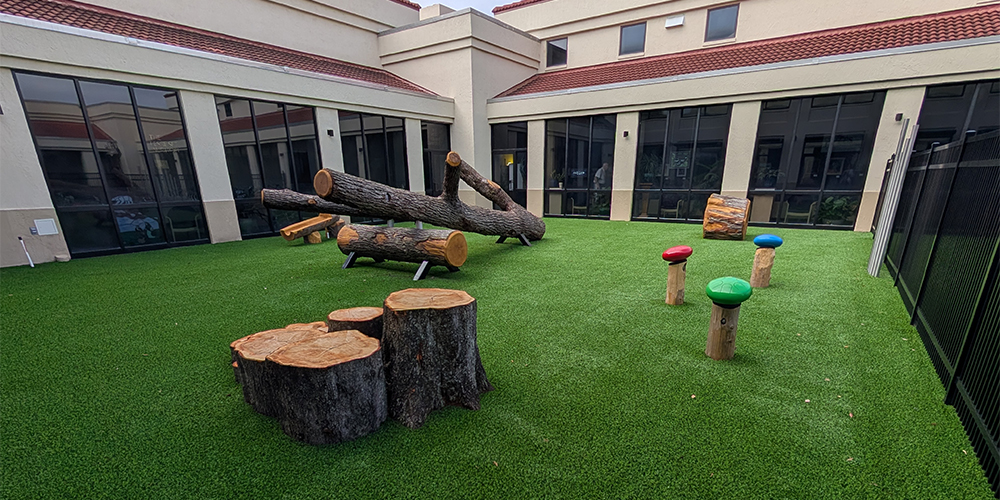
As part of the $18.4 million campus transformation at the Jewish Community Alliance (JCA) in Jacksonville, Florida, the center recently completed a new playground designed to support imaginative play, accessibility and family engagement within a community-centered campus.
Adam Chaskin, the CEO of the JCA, said the fresh redesign reflects the center’s understanding that children learn through active engagement with their environment.
“Open-ended structures and natural elements invite imaginative play, collaboration and ongoing reinterpretation to all age groups,” said Chaskin. “The design intentionally includes appropriate risk-taking. Children seek risk to test their abilities, build confidence and develop sound judgment. The challenges such as climbing, balancing and navigating move along the developmental continuum and allow children to assess their limits within a safe, thoughtfully prepared environment.”
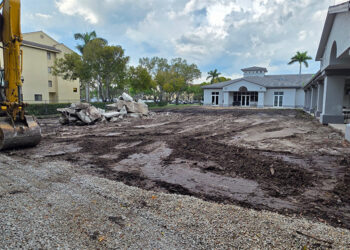
Chaskin said the biggest challenge in providing this outdoor space was balancing the need to physically grow and work within the limited footprint of the property. The JCA’s central building is landlocked, prohibiting outside growth. As a result, the team decided to build a second floor to preserve land for the playground.
“Member reaction has been outstanding,” said Chaskin. “The playground is in a courtyard space in the middle of our building so everyone was able to watch the progress over the past several months. The highlight was moving the 3,300-pound tree into the courtyard which traveled here by truck from Ontario, Canada. Now that both sides of the playground are open, members are flocking to the space to enjoy with their families.”
Mid-Willamette Family YMCA
Spanning 7,200 square feet, the all-adaptive and inclusive playground at the Mid-Willamette Family YMCA in Albany, Oregon, features 100% customized equipment designed specifically for the Y.
Tino Barreras, the chief program officer at the Mid-Willamette Family YMCA, said the space includes fully wheelchair-accessible surfacing and ramps that connect all major play features, allowing children of all mobility levels to navigate the playground independently.
“We’ve incorporated a variety of inclusive elements such as adaptive swings with harness support, ground-level play components, sensory-rich panels and multi-user equipment that encourages cooperative play between children of differing abilities,” said Barreras. “Beyond physical accessibility, the playground promotes social inclusion. The layout encourages interaction, shared experiences and imaginative play, ensuring children are not separated by ability.”
After construction, Barreras said the playground quickly became a vibrant hub for the community. Families from across the region visit regularly, and the Y has seen strong daily usage with peak times being after school and on weekends.
“It’s also become a destination for school groups, therapy programs and community organizations serving youth with diverse needs,” said Barreras. “Perhaps the most powerful indicator of its popularity is the feedback from families. Many share it’s the first time their child has been able to fully participate in a playground experience. That sense of belonging has made the space deeply impactful.”
Creating this innovative space required specialized equipment, thoughtful design and higher upfront costs compared to traditional playgrounds. Chaskin said another challenge was ensuring they were designing with the community, not just for them.
“This meant engaging families, educators and individuals with disabilities to better understand real needs rather than making assumptions,” said Chaskin. “That process was essential but required time, coordination and flexibility.
Lasting Advice
Overall, Sidwell said the biggest challenges rec leaders are facing when adding playgrounds is the labor-intensive maintenance and hidden costs of aging equipment, particularly with materials that require frequent staining or part replacements.
“There’s also the challenge of space efficiency, as urban and community centers need to pack diverse play experiences into smaller footprints,” said Sidwell. “Lastly, many are facing a planning-to-play gap, where the initial design doesn’t account for the long-term flow of traffic, leading to overcrowding and safety concerns during peak hours.”
To overcome these hurdles, Sidwell said to invest in naturally durable, splinter-free materials that don’t rely on chemical coatings or frequent upkeep to stay beautiful and safe. When space is a premium, look for modular, vertical structures that can be customized to your specific site, allowing you to maximize the play-value-per-square-foot.
“Beyond the physical equipment, the trend toward integrating small, spontaneous play elements like steppingstones, bridges or musical panels into pathways can turn an entire facility into a cohesive, active environment,” said Sidwell. “A well-designed outdoor space isn’t just a place for kids to burn off energy — it’s a sanctuary for building healthy habits, empathy, resilience and a life-long love for the natural world.”