

Learn how teams can correct bad communication plans by using AI.
Ask anyone who works at a YMCA or JCC what drives them up the wall, and you’ll hear some version of the same three complaints: “I didn’t know that was happening.” “No one told me the program had changed.” “It was canceled? Why am I finding out from a member?”
For years, I treated this as a communications problem. As a JCC marketer, I assumed it was my job to fix it, and if I could just find the right channel or cadence, the chaos would settle. I was wrong.
No one person can hold every detail about every program in their head, and no communication plan — however well built — can compensate for that. When I started experimenting with AI, I found something that solved it: a knowledge base trained on everything your organization knows, and on how you want that information shared.
If you have worked with me before, you know I’m cautious about handing member-facing communication over to AI. The human-to-human part of this work is the whole point, and I want to see it protected as the world changes around us. But internal knowledge is different territory, and it’s territory most of our teams could use real help navigating.
Here’s what that territory usually looks like right now. Your team notifies the entire organization every time something changes — a new instructor, a shifted schedule, a canceled outing — and the information still scatters across a website, a CRM, an app and a dozen documents nobody has time to keep current.
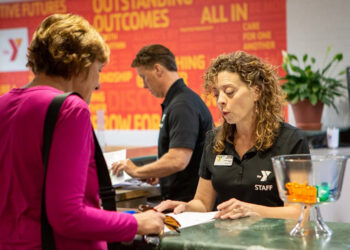
One or two people end up as the only ones who know a given program inside and out, so the welcome desk keeps forwarding calls to inboxes that are already full, and members wait far too long for answers that should take thirty seconds. Registrations suffer for it. So does the first impression a member walks away with.
I’ve been building something with the community centers I work with: an AI tool trained on your documents, website, apps and the language you use to talk about your programs, from a Tuesday yoga class to how you would communicate during an emergency. Any community-facing staff member can ask it a question and get back something accurate, on brand, and ready to hand to a member by email, phone or at the front desk.
When we put AI to work this way, our teams don’t feel replaced, they feel relieved. We take the data chasing off their plates so they can spend their energy where it belongs — on the humanity of the job, not the paperwork behind it. AI still isn’t the voice of our organizations. It’s just finally giving that voice room to breathe.