
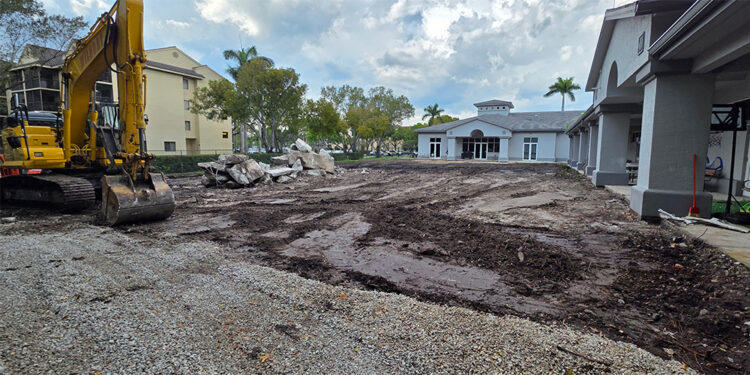
With many recreation centers undergoing massive renovations and construction projects to replace and upgrade aging facilities, industry leaders are getting creative pertaining to architecture and design planning.
Below, discover successful design strategies and trends from thought leaders at DynaDome, Fitness Flooring, Levis JCC and the Tampa Metropolitan Area YMCA.
Creating Hybrid Spaces
Cihan Ozdemir, the VP of sales at DynaDome, said his company is increasingly seeing the need in the industry to provide swim lessons for youth at an early age.
Also, wellness and recovery are becoming more focal than before and aquatics spaces now include recovery to promote and provide wellness programming.
“The ability to use aquatics spaces year-round allows facilities to offer that,” said Ozdemir. “But many centers currently struggle with the ability to be either always indoor or always outdoor. The equipment needs for indoor aquatics strain budgets, and maintenance is brutal. Outdoor aquatics is not always available and programming can be difficult and uncertain.”
DynaDome’s retractable structures specifically are one solution that can tackle those challenges by eliminating the need for the costly equipment and guaranteeing consistent programming with the click of a button.
Capitalizing on Changing Trends
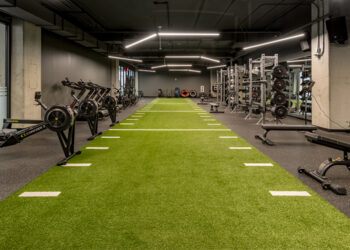
Steve Chase, the president of Fitness Flooring, said one of the design trends he’s seen since the COVID-19 pandemic is the decrease in group exercise areas and the expansion of strength training.
“In some cases, group exercise areas have been removed completely to allow more space for strength,” said Chase. “This increases the need for rubber flooring and deemphasizes some of the areas that would typically use a more resilient flooring.”
Another trend Chase highlighted is the growing number of facilities moving away from wood flooring to types of polyurethane floors for court sports.
“Facility owners and managers have seen the impressive technological changes in these products and recognize they perform as well as wood flooring without some of the problems with maintaining wood,” said Chase. “Wood will likely always be the gold standard for court sports, but these products have gained considerable traction.”
Despite adapting to trends and embracing more flexible martials, Chase said it’s an ongoing challenge for centers to determine space allocation for various activities and to forecast what will be needed in the future.
It’s impossible to know the next big trend and there’s only so much space to work with. So, Chase said the best thing leaders can do is be prepared to pivot.
“While we used to put just basketball and volleyball lines on a court space, now we’re tasked with adding a few pickleball and padel sports lines to maximize usage,” said Chase. “Many facilities have opted to use tape as temporary lines for pickleball on their basketball courts. Others have used interlocking rubber to cover their old wood group exercise floors to provide more space for weight training.”
For more ideas about how to repurpose your existing spaces, contact Fitness Flooring at fitnessfloors.com.
Levis JCC’s New Renovation
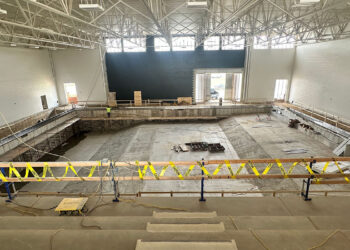
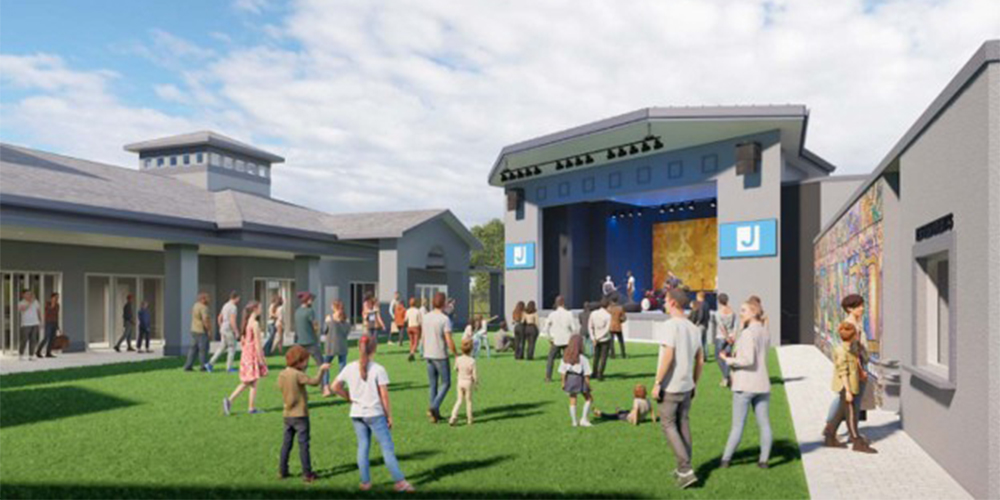
Levis JCC is undergoing a major campus reinvention centered on a new 22,000-square-foot facility with 9,000 square feet of outdoor space. Alan Nash, the COO of the J, said noteworthy features will include a state-of-the-art amphitheater with a 200-square-foot digital screen, along with fully upgraded lighting and audio-visual systems in both the amphitheater and indoor auditorium.
“These venues will each seat 250 people, significantly enhancing our capacity for performances and community events,” said Nash. “The interior design emphasizes openness and connectivity, with glass walls that create seamless sightlines from the main lobby through the art gallery and out to the courtyard stage. Another exciting addition is a small, adaptive playground located behind the courtyard stage, featuring a rock-climbing wall. This space will support afterschool programs, special events and inclusive programming for our special needs department.”
Levis JCC previously hadn’t experienced a renovation since 2016, and that project was largely cosmetic. This transformation is more comprehensive and reimagines the interior with a modern and elegant design.
Beyond aesthetics, this project improves functionality and flow, allowing the organization to use space more efficiently while creating a more contemporary environment for the community.
“This project significantly expands our usable space, bringing it to nearly 60% of the building,” said Nash. “It also maximizes our outdoor footprint, with 90% of outdoor areas dedicated to Levis JCC programs, events and activities. This intentional design ensures our campus is actively serving our community in meaningful and engaging ways.”
Nash stressed it’s essential to consider all stakeholders when considering a project like this, as each perspective brings different needs and priorities. “One critical piece of advice — budget carefully, then add more,” he added. “Projects of this scale inevitably require flexibility. Building that cushion from the start is invaluable.”
The Mary W. Sierra Family YMCA
Opening in September 2026, the Mary W. Sierra Family YMCA branch of the Tampa Metropolitan Area YMCA will be a two-story, 49,319-square-foot, state-of-the-art wellness destination.
Jennifer Wainman, the VP and chief marketing officer at the Tampa Metropolitan Area YMCA, said this facility will feature a 35,000-square-foot outdoor aquatics center with lap and teaching pools, as well as a family adventure pool. The center will also incorporate group exercise studios and expansive wellness and fitness spaces.
“Designed by FleischmanGarciaMaslowski Architecture and constructed by Creative Contractors, the branch will establish itself as a leading resource to enable everyone in the community to live their healthiest and most fulfilled lives,” said Wainman. “It will set a new standard for accessible, innovative and holistic well-being in Pasco County, Florida.”
Complementing the branch will be a comprehensive range of youth-focused programs, including afterschool care, youth sports, and summer camps as well as evidence-based chronic disease prevention initiatives and specialized wellness services for seniors and cancer survivors.
Wainman said the architecture and design of the Mary W. Sierra Family YMCA is inspired by the highly successful Spurlino Family YMCA in South Hillsborough County and incorporates many of the same innovative amenities and thoughtful design elements. This strategy is one of her top pieces of advice for the industry.
“Utilize the unique power of our Y movement,” said Wainman. “Ys across the country have a lot of tremendous physical attributes that can be duplicated. Don’t be afraid to reach out to your colleagues to discuss what’s working well for them. Take the physical aspects of your current buildings that are working well, evolve and incorporate them with other great examples from across our movement into an even more impactful organization.”