

Leaders share how their centers are using data driven tools to inform smarter decisions, enhance engagement and meet members where they are.
From workout floors to member inboxes, data is quickly transforming how community recreation centers operate. YMCAs and rec centers are shifting from assumptions to evidence. Dashboards and automated tools show how data — used with intention — can drive smarter, more responsive operations.
By understanding member behavior and making informed decisions, community centers can improve programming, support retention and align with community needs.
EcoFit Equipment has become an essential part of operations at the YMCA of Northwest Florida. Implemented across three different branches, the equipment tracks its usage in real time, offering insights far beyond anecdotal observations.
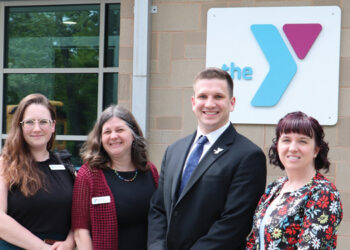
Staff can now identify which machines are used most, what times of day are busiest and how effectively their space functions. Trenten Kawas, the engagement director for the YMCA of Northwest Florida, said that information translates directly into operational improvements.
“We wanted it so we could track equipment usage to see if we might need more equipment or if there are pieces we don’t need,” said Kawas. “It’s also helpful to see the ratios of cardio and strength machines, and the saturation rates for each type, so we can make adjustments as necessary.”
For instance, when the Y’s downtown branch expanded, the EcoFit data helped determine which equipment to add based on high-usage trends and behavioral patterns.
The system also alerts staff when a machine hasn’t been used in 48 hours, a tool used for catching maintenance issues before they become a problem. Kawas said this has helped reinforce trust with members.
“Members now know we have a method for tracking our equipment usage, rather than just guessing when items need to be turned over,” explained Kawas.
The introduction of 24/7 access at the Community YMCA at Gulf Breeze, one of Northwest Florida’s Y locations, led to the adoption of Alcatraz AI facial authentication. This system enhances security by confirming member identity upon entry and detecting what Kawas called “tailgating,” an act where someone follows another member in without swiping in.
The system also provides data on peak traffic hours, allowing for more strategic staffing and improved facility flow during busy times.
While usage tracking and access control are important, other centers are pushing data collection further into the workout experience itself.
The YMCA of the Chippewa Valley in Wisconsin is leveraging EGYM, a connected strength training circuit that automatically adjusts to each member’s personalized workout plan. The system uses a wristband to load individualized settings on each machine, removing the guesswork from resistance training.
“Once members complete their onboarding, they receive a personalized EGYM wristband,” said Haili Carlson, the director of healthy living at Eau Claire South. “This automatically connects them to the machines and loads their customized training program. Members can complete a full-body workout in as little as 22 minutes.”
Carlson said EGYM offers nine training programs tailored to a variety of goals, from general fitness to muscle building and weight loss. Each program is structured into four phases, with six training days per phase. As members move through these phases, they experience a variety of training methods designed to challenge, avoid plateaus and promote progress continually.
Carlson added that EGYM was also added to make strength training more approachable, especially for those new to fitness who otherwise may be intimidated by it. EGYM takes over barriers by creating a stress-free and supportive environment. Overall, she said EGYM’s programs have empowered her community’s access to wellness.
The data EGYM collects is equally valuable.
“EGYM provides members with valuable and personalized data through the EGYM app, helping them track their progress in meaningful ways,” said Carlson. “Members can see their strength levels, circuit completion frequency and changes in their Bio Age, which estimates biological age based on performance.”
The YMCA’s staff use an internal dashboard to monitor member engagement and identify trends. Peak usage times, muscle imbalance data, and demographic insights all help shape programming and resource allocation.
Although EGYM is still new to the Eau Claire South branch, Carlson noted strong potential to develop new group programs based on these insights.
Not all rec centers are using connected machines to track fitness behavior. At the JCC of Greater Pittsburgh, the focus is on engagement systems that connect across programs and departments. While their fitness equipment is not data-enabled, the JCC has built a robust communication platform that uses Salesforce CRM and automated texting to drive member interaction.
“We’ve developed an engagement system, which uses texting and automation,” said Elie Golin, the division director of fitness and membership at the JCC of Greater Pittsburgh. “Depending on which activities the member is engaged in, they will get automated texts at different intervals of time that will suggest new programs.”
These texts, though triggered by automation, are managed by real staff to keep the interaction personal. The JCC also uses this system to track who’s responding, participating and converting on offers like complimentary fitness assessments or special programming. Dashboards help staff track results and refine future messaging strategies.
Insights from this system have already led to new offerings, such as personal meetings between families and children’s department directors, designed to help answer specific questions and improve program engagement.
Another discovery came from post-cancellation survey data where many former members cited non-usage as the reason for leaving. A deeper look revealed a gap in young adult programming, which the JCC is now actively working to address.
“What we’re learning by using strict data is that it’s very likely we’ve made a lot of mistakes in the past because they’re going off of feel more than actual data,” said Golin. “We want everything to be data informed.”
The JCC attributes significant revenue growth to this approach.
“Since we’ve started doing these, our revenue has increased like crazy,” said Golin. “Revenue has gone up, experience has gone up and it’s all data driven.”
Each of these centers demonstrates that connected fitness doesn’t require one single solution. Some rely on embedded equipment technology to inform floor design and program offerings. Others invest in behavior-driven systems that adapt across multiple departments. What they share is a commitment to using data to act, not just monitor.
The future of connected fitness in community recreation may not lie in machines alone but in the mindset of continuous learning. Whether it’s tracking foot traffic to improve staffing or using wristbands to simplify strength training, data is helping community centers respond more thoughtfully to member needs.
As more facilities embrace these tools, the result isn’t just smarter systems, it’s stronger relationships, better outcomes and community centers built on intention.