
Effective community partnerships with other organizations are not only common in the current landscape of recreation — they’re critical to the success of nonprofit rec centers.
That’s why more leaders are thinking outside the box and getting creative with new affiliations to further the mission of their organization in their community
Below, you’ll see firsthand how the Metropolitan YMCAs of Mississippi, JCC Indianapolis, YMCA of Greater Indianapolis and Shaw JCC are achieving new levels of success through innovative collaborations.
Metropolitan YMCAs of Mississippi
The Metropolitan YMCAs of Mississippi started a partnership with the Fellowship of Christian Athletes (FCA) to transform an aging sports arena into one of the state’s premier indoor youth sports training facilities.
The partnership will reimagine the Y’s sports arena by creating a modern, multi-use athletic environment featuring new artificial turf, batting cages, upgraded lighting, enhanced safety systems and flexible programming space.
LeRoy Falcon, the president and CEO of the Metropolitan YMCAs of Mississippi, said the two entities can combine the Y’s facilities, programming, and reach with FCA’s experience in mentoring athletes and supporting coaches.
“This collaboration allows us to serve more young people and families while creating an environment where participants can grow as athletes and as individuals,” said Falcon. “Instead of working separately, we can expand access, strengthen programming and create more meaningful opportunities for young people to connect with positive adult role models.”
An important part of this partnership is FCA’s Mississippi state office has moved into the YMCA facility. Falcon said sharing space provides the FCA an area that aligns with its athletic and ministry goals and gives the YMCA an opportunity to welcome new members. FCA brings an established youth baseball development program, along with players and coaches.
Falcon said the new renovations have transformed an aging facility into an attractive and active destination for members and other sports participants.
“Our shared goal is to create an environment where young people improve not only as athletes, but also in character, confidence, leadership, teamwork and their relationships with others,” said Falcon. “We see the arena as much more than an athletic facility. It will be a community gathering place that promotes healthy activity, belonging and positive youth development.”
JCC and YMCA of Indianapolis
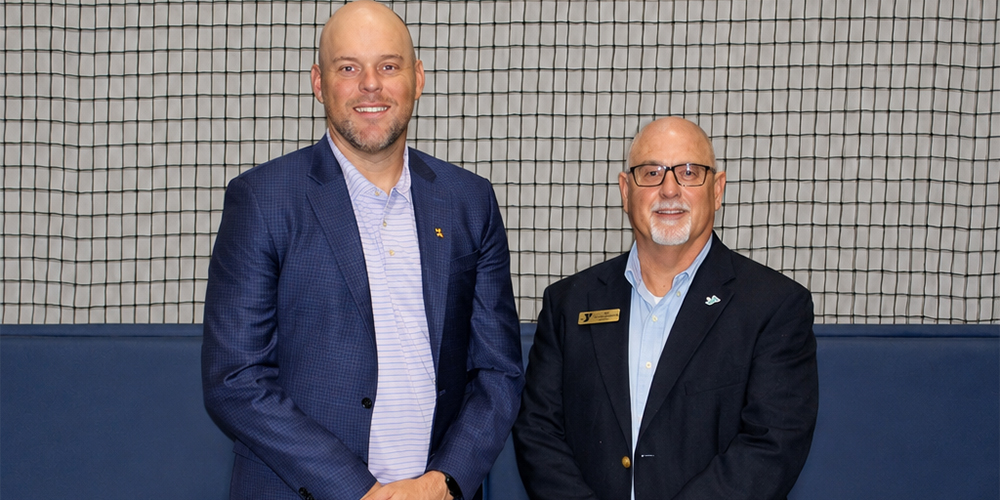
In 2025, the YMCA of Greater Indianapolis and JCC Indianapolis announced a new partnership to extend access to fitness and wellness services for members of both organizations. The agreement allows JCC members to be welcomed at YMCA facilities on days when the JCC is closed or closes early. In turn, YMCA members can enjoy JCC amenities when the Y has reduced hours or closures.
This reciprocal access ensures members can continue to pursue their wellness goals without interruption, while also connecting with new spaces and faces across Indianapolis.
Sam Dubrinsky, the CEO of JCC Indianapolis, said the partnership has been more successful than either organization anticipated.
“The partnership has also grown well beyond this membership benefit,” said Dubrinsky. “The Y’s leadership team visited the JCC to tour our campus, connect with our staff and explore additional ways our organizations can collaborate. Gregg Hiland, the president and CEO of the YMCA of Greater Indianapolis, recently joined a panel on antisemitism and allyship, where he spoke about the importance of the YMCA-JCC relationship to our entire community, regardless of faith or background.”
Dubrinsky said their relationship reflects what’s possible when two mission-driven organizations approach collaboration with trust and a shared purpose.
When this collaboration first began, Dubrinsky said they heard concerns over losing members. However, she agreed with Hiland on not viewing one another as competitors.
“The JCC and YMCA are both values-based organizations rooted in faith, tradition and community,” said Dubrinsky. “As long as each organization remains true to its mission, neither needs to fear the other’s success. In fact, our partnership helps both organizations retain members by ensuring their wellness routines are not interrupted by holiday closures.”
Shaw JCC
Shaw JCC in Akron, Ohio, created the Perks Partnerships Program to add even more value to a JCC membership while strengthening relationships with local businesses.
The program is built around a simple, mutually beneficial concept: JCC members receive exclusive discounts at participating businesses by showing their membership card. In return, employees of those businesses who choose to join the JCC have their application fee waived.
Stephanie York, the VP of development and community engagement at Shaw JCC, said creates a true win-win for the community.
“Our members enjoy tangible savings at local businesses simply by being members, while participating businesses receive complimentary exposure,” said York. “At the same time, businesses are encouraged to promote wellness by making it easier for their employees to become JCC members.”
Specifically, York said the diversity of participating businesses has been one of the program’s greatest strengths, allowing members to take advantage of perks fitting their interests and lifestyles.
Some participating entities include Nothing Bundt Cakes, Café Arnone, Lily Senior Solutions, Akron Rubber Ducks, Akron Art Museum, Akron Zoo, Akron Children’s Museum and many more.
Aside from the program, York said another creative partnership the J has is with Hattie Larlham, a nonprofit creating opportunities for more than 1,600 children and adults intellectual and developmental disabilities. Through this collaboration, Shaw JCC serves as a workforce development site, providing meaningful, real-world job experiences for Hattie Larlham clients.
“During their time with us, they’re evaluated on their readiness for competitive employment while also discovering the types of work they enjoy and where they excel,” said York. “The partnership reflects our shared commitment to inclusion, opportunity, and empowering people of all abilities to succeed.”
Final Thoughts
For leaders brainstorming creative community partnerships, Dubrinsky said to not let ego, fear of competition or a scarcity mindset stand in the way of a meaningful partnership.
“When that happens, your members, organization and broader community miss out on valuable opportunities,” said Dubrinsky. “At the same time, choose partners thoughtfully. The JCC-YMCA relationship works because we share fundamental values and a commitment to strengthening the community. The strongest partnerships are built on that alignment, along with trust, open communication and a clear understanding of how the collaboration benefits everyone involved.”
York echoed Dubrinsky’s thoughts and said to think carefully about a new collaboration and understand the needs of your community and the goals of your potential partners. Then, create opportunities that are simple, mutually beneficial and easy to participate in.
“It’s also important to think beyond sponsorships,” said York. “The best partnerships build relationships, create ongoing engagement and strengthen the local community. When organizations work together to support one another, everyone — including members, businesses and the community as a whole — benefits.”