
Ensuring everyone has access to the programming and resources community rec centers provide is a foundational aspect of diversity, equity and inclusion (DEI).
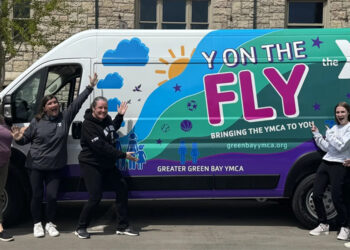
That’s the central reason as to why the YMCA of Greater Rochester recently eliminated membership fees altogether in two of the most under-resourced neighborhoods in the Y’s service area.
Ernest Lamour, the president and CEO of the Y and chair of the YMCA African American CEO Network (AACN), said since the organization eliminated fees at those centers, they’ve seen an increase in membership. In the past year alone, visits to neighborhood centers increased by 99%.
“That’s why we know the need and the want for these centers is there,” said Lamour. “We wanted to eliminate the barrier to access. The decision was made with board support, knowing we would be funding these efforts through operations and creating an urban endowment to help sustain this long term. Fundraising remains a critical component in all of this for us.”
Since this initiative began, the Y has seen additional funders step up to support the neighborhood centers with more purposeful partnerships being created because of the Y’s intentional shift in service.
Lamour said the YMCA of Greater Rochester serves one of the poorest zip codes in the state of New York, and the organization is continuing to reinvest every year.
“It’s because it’s the right thing to do,” said Lamour. “The ROI is providing needed services. That’s what community truly needs. We continue to work with our community members to learn what’s needed. Then, we work with like-minded organizations to see how we can partner with them to best serve those needs.”
Lamour added he’s learning in part from the other leaders within the AACN to help further inclusion at his Y.
“It doesn’t matter who is at the helm of the issues our communities are encountering,” said Lamour. “The AACN is strong and committed to identifying needs and looking for funding to support our efforts. One piece of advice I’ve learned is to include the right people in the decision-making processes and partner with those who are experts to help identify ways to make your organization more accessible for all.”

JCC Denver
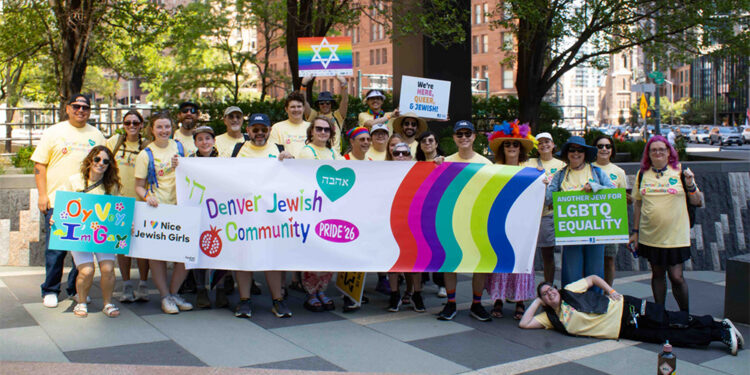
Elsewhere at JCC Denver, rec center leaders are allocating time and resources to underserved community members through the J’s LGBTQIA+ program.
Daniel Siegel, the director of Engagement & Jewish Learning at JCC Denver, said there’s still relatively little LGBTQIA+-specific programming within the broader Jewish community, so JCC Denver offers a more approachable entry point than other traditional religious spaces.
“We know many LGBTQIA+ individuals feel more comfortable entering a space when they know an event has been intentionally created with them in mind,” said Siegel. “That sense of intentional welcome can make a significant difference. Through our Ahava Collective programming, we’ve seen people reconnect with the Jewish community after having stepped away from it — sometimes after many years. Creating a space where people can show up fully as both LGBTQIA+ and Jewish allows them to explore that connection on their own terms and build a meaningful sense of belonging.”
Siegel said the response has been consistently positive with reliable attendance across the J’s programming, including a mix of familiar faces and new participants joining the community for the first time.
“Our larger gatherings demonstrate just how much demand there is for these spaces,” said Siegle. “Signature events such as Pride Shabbat and Queer Seder can draw over 100 people. Beyond attendance numbers, the recurring participation is especially meaningful. It shows people aren’t simply coming to an event — they’re finding community and choosing to come back.”
Another way JCC Denver works to make programming more accessible is through sliding-scale pricing for some of its programs. Offering flexible pricing helps reduce barriers and allows more people to engage in ways that work for their individual circumstances.
Final Advice
For industry leaders looking improve connections with underserved groups, Siegel said to start by involving the people you hope to serve.
“One of the most valuable things an organization can do is activate a core group of dedicated LGBTQIA+ volunteer leaders and give them a meaningful role in shaping programs,” said Siegel. “Rather than assuming what a community wants, invite community members to help create it. Finally, focus on connection and common interests rather than making identity the only reason people are gathering. LGBTQIA+ people — like everyone — are looking for a sense of belonging. When programming creates opportunities for those connections, inclusion becomes part of the culture rather than simply a program offering.”